
New SBA Rules Take Effect October 1, 2026 — What Every Seller Needs to Know
Starting October 1, 2026, the SBA’s updated lending rules change how business sales are financed through the 7(a) loan program. Seven changes matter most to sellers: every deal needs an independent valuation, $3 million-plus deals require a Quality of Earnings report with a Cash Proof, the debt service coverage ratio rises to 1.25:1, loan amortization is capped at 10 years, sellers can stay involved as consultants for up to 24 months, earnouts are prohibited, and seller note refinancing seasoning goes from 24 to 36 months. This post puts all the pieces together in one place so you know what to expect, what to plan for, and what to do now.
Key Takeaways
 These seven changes apply to every SBA-financed business sale with a loan number issued on or after October 1, 2026.
The combined effect raises the bar on financial due diligence and tightens what a given cash flow will support in debt.
Sellers with clean books, realistic pricing, and early planning are in the strongest position.
Deal structures that relied on earnouts, projections, or long amortization need to be rethought.
The seller-friendly changes — longer consulting periods and clearer guarantee terms — give you more transition options.
How Do the New Valuation Rules Affect My Sale?
Every SBA-financed business sale now requires an independent business valuation from a credentialed professional — no exceptions. The previous rules let banks do their own valuation on smaller deals (those under $250,000 in business-only financing). That threshold is gone.
The valuation must be ordered by and prepared for the bank. A valuation you obtained for your own planning purposes will not satisfy the requirement. A valuation the buyer obtained will not either. The bank picks the valuator, defines the scope, and receives the report.
If the purchase price exceeds the valuation, the buyer must cover the difference with additional equity — their own cash. The bank will not lend against a gap between the price and the value.
What this means for you: Get your own valuation done before you go to market. Not because the bank will accept it, but because you need to know what number the bank’s valuation is likely to come back with. Pricing your business above what it will appraise for creates a gap that kills deals. Pricing it at or near its supportable value creates a deal that closes.
What Is the Quality of Earnings Requirement?
For Initial Acquisition and Business Expansion deals with a purchase price of $3 million or more, the bank must also order a Quality of Earnings report. The threshold is measured on the purchase price before applying buyer equity, seller debt, or any other financing — so it cannot be structured around.
The QoE goes deeper than a valuation. It examines whether the earnings are real, recurring, and sustainable. The SBA requires it to include a Cash Proof — a forensic-level analysis that reconstructs cash receipts and disbursements by matching bank statement data against the income statement and tax return. The Cash Proof must cover a trailing 12-month period and the last two full fiscal years.
The QoE must document all add-backs and adjustments, assess customer concentration risk, evaluate contract continuity, and determine whether revenue and margins will hold after the sale. The bank must use the QoE-adjusted earnings — not the seller’s reported numbers — to calculate debt service coverage.
What this means for you: If your business is likely to sell for $3 million or more, every dollar flowing through it will be traced from the bank account to the income statement to the tax return. Unreported income, undisclosed expenses, aggressive add-backs, and related-party transactions will surface. The time to clean this up is 18 to 24 months before you go to market. If your books are already clean, the QoE process will confirm your value. If they are not, the QoE will reduce it.
Why Does the Debt Service Coverage Ratio Matter?
Under the previous rules, most business sales needed a debt service coverage ratio of 1.15:1 — meaning the business had to earn $1.15 for every $1.00 of debt payments. The new rules raise that to 1.25:1 for Initial Acquisitions, Owner Buyouts, and ESOP/Cooperative transactions. Business Expansions remain at 1.15:1.
Here is why that 10-point difference matters. Debt service coverage is the ratio that determines how much debt a given cash flow can support. When the required ratio goes up, the maximum supportable debt goes down — and with it, the maximum purchase price.
A simple example: a business generates $500,000 in annual cash flow (EBITDA). At a 1.15:1 ratio, that cash flow supports roughly $435,000 in annual debt service. At a 1.25:1 ratio, it supports roughly $400,000. That $35,000 annual difference translates to a meaningfully lower loan amount over a 10-year term.
There is a second change that compounds this. Under the old rules, projections could satisfy the debt service requirement — the buyer could show that earnings would grow into the required ratio within two years. Under the new rules, the lender must evaluate projections but may not rely on them to meet the DSC requirement. Historical earnings must carry the debt. The “buyer will grow into it” argument no longer works.
What this means for you: Your business’s trailing earnings are now the ceiling on what the SBA-financed portion of the deal can support. Strengthening those earnings before you sell — by controlling costs, documenting revenue, and building recurring income — directly increases what your business can sell for.
What Is the 10-Year Amortization Cap?
The SBA now requires that the business portion of a change of ownership loan be amortized over no more than 10 years. The loan may not have a balloon payment.
If the deal also includes real estate, the real estate portion may be amortized over up to 25 years. The lender can structure this as either two separate loans (one for the business, one for the real estate) or a single blended loan using a weighted average. But all non-real-estate uses of proceeds — including soft costs and working capital — must be allocated a 10-year term.
The SBA 504 program cannot be used on a blended basis with a change of ownership loan.
What this means for you: A shorter amortization means higher monthly payments, which makes the debt service coverage ratio harder to hit. Combined with the higher DSC requirement, this further limits how much debt a given cash flow can carry. On the other hand, it also means the buyer builds equity in the business faster, which reduces the bank’s risk — and may make lenders more willing to approve deals that are otherwise on the margin.
Can Sellers Stay Involved Longer?
Yes. The SBA doubled the time a seller can stay on as a paid consultant from 12 months to 24 months, including any extensions. This applies to Initial Acquisitions and Business Expansions.
In a Partial Change of Ownership, the seller has even more flexibility. The seller may remain as an owner, officer, director, stockholder, Key Employee, or employee — whatever role makes sense for the business.
A selling owner who retains less than 20% ownership after the sale must provide a full personal guarantee of the full loan amount for at least two years. But the SBA clarified that these guarantors are not required to pledge their personal residence or other personal assets in a collateral shortfall.
What this means for you: You have more time to help with the transition, which is good for you, good for the buyer, and good for the business. If you are considering keeping a small stake, understand the guarantee obligation — and understand that it does not extend to your personal property. This clarity removes a common deal-killer.
Are Earnouts Still Allowed?
No. Under the new rules, seller earnouts are prohibited on SBA-financed business sales. An earnout is a payment to the seller that is contingent on the business hitting certain performance targets after the sale closes.
Buyer rebates tied to business performance are allowed. The difference: an earnout pays the seller more if the business does well, while a rebate reduces the buyer’s cost if the business does well. When the buyer receives a rebate, the proceeds must be applied to pay down the principal balance of the 7(a) loan. The SBA confirmed that this principal reduction does not trigger a subsidy recoupment fee.
What this means for you: If you have been thinking about structuring part of your sale price as an earnout — for example, to bridge a gap between what you want and what the buyer will pay — that option is off the table for SBA-financed deals. The price must be set at closing. If the buyer’s bank is an SBA lender, the deal structure needs to reflect the full agreed price up front.
What Changed with Seller Note Seasoning?
When a seller carries a note as part of the deal — meaning you finance part of the purchase price yourself — that note must be on full standby to count as equity. Full standby means no payments of principal or interest for the life of the 7(a) loan.
Under the previous rules, a seller note structured as part of an SBA-financed deal was eligible for refinancing (being replaced with a new loan) after 24 months. The new rules extend that to 36 months.
What this means for you: If you carry a seller note on standby, you will wait three years — not two — before the buyer can refinance it and start making payments to you. This extends your exposure window and delays the point at which you start receiving payment on that portion of the purchase price. Factor this into your financial planning and your expectations about when you will be fully paid.
What Should I Do Right Now?
If you plan to sell your business in the next one to five years, here is how to use this information.
- Get a preliminary valuation. Understand what your business is worth today under the standards a bank will apply. This is not a listing price — it is a reality check. IBA performs these valuations regularly and we offer special incentives for “Informational Business Valuations.”
- Clean up your books. Make sure your internal financial statements, tax returns, and bank statements tell the same story. If a Cash Proof would find discrepancies today, fix them now — not during due diligence.
- Know your numbers. Calculate your trailing EBITDA, your post-transaction debt service, and your DSC ratio. If it does not hit 1.25:1, identify what needs to change before you go to market.
- Plan your transition. With 24 months of consulting time available, you can build a real handoff plan. Buyers pay more for businesses where the transition risk is low.
- Talk to your advisor early. These rules change how deals are structured, priced, and financed. The earlier you plan, the more options you have.
The businesses that sell well under these new rules will be the ones with clean books, documented earnings, realistic pricing, and owners who planned ahead. That has always been true. The SBA just made it official.
Frequently Asked Questions
When exactly do these rules take effect? The new rules apply to any 7(a) loan application that receives an SBA loan number on or after October 1, 2026. Applications that already received a loan number before that date are processed under the previous rules (as of August 2026).
Do these rules apply to all business sales? They apply to business sales financed through the SBA 7(a) loan program. Deals financed entirely with conventional bank loans, private equity, or cash are not subject to SBA SOP requirements — although conventional lenders may apply similar standards.
Can I still use seller financing? Yes. Seller notes remain an important part of deal structures. If the note is on full standby, it can count toward the buyer’s equity injection (up to half). The change is that the note must season for 36 months before it can be refinanced, up from 24.
What if my business is worth less than $3 million? You still need an independent business valuation, but you are not subject to the Quality of Earnings requirement. The DSC ratio, 10-year amortization cap, and all other provisions still apply.
Are these rules likely to change again? SBA lending rules are updated periodically. The SBA has issued nine versions of SOP 50 10 since 2008. However, these changes represent a deliberate tightening of change of ownership requirements, and there is no indication they will be rolled back in the near term.
This is Part 4 of a four-part series on the SBA’s new lending rules effective October 1, 2026.
The information in this post is based on SBA SOP 50 10 8.1. It is general information, not legal, tax, or lending advice. Consult your M&A advisor, lender, and legal counsel about your specific situation.
Read More
Selling Your Business? The SBA Just Changed How Long You Can Stay Involved
The SBA’s updated lending rules make three changes that directly affect what happens to the seller after a business sale closes. First, the time a seller can stay on as a paid consultant doubles from 12 months to 24 months. Second, in a partial change of ownership, the seller can now remain in essentially any role — owner, officer, director, stockholder, key employee, or employee. Third, a seller who keeps less than 20% ownership after the sale must provide a full personal guarantee of the full loan amount for at least two years. These changes give sellers more room to help with transitions while creating clearer obligations when they retain a stake.
Key Takeaways
The seller’s consulting transition period doubles from 12 months to 24 months for Initial Acquisition and Business Expansion deals.
In a Partial Change of Ownership, the seller may stay on as an owner, officer, director, stockholder, Key Employee, or employee.
A selling owner who retains less than 20% ownership post-sale must personally guarantee the full loan amount for a minimum of two years after final disbursement.
These two-year guarantors are not required to pledge their personal residence or other personal assets in the event of a collateral shortfall.
Can Sellers Stay Involved After the Sale?
Yes — and under the new rules, they can stay involved longer than before. Starting October 1, 2026, the SBA doubles the time a seller can serve as a paid consultant to the business from 12 months to 24 months, including any extensions.
This is a meaningful change. Under the previous rules, a 12-month window was often too short for a smooth transition, especially in businesses where the seller held key customer relationships, managed complex operations, or had specialized knowledge that could not be transferred quickly. Buyers often wanted more time with the seller. Sellers often wanted to help. The rules said no.
Now the window is 24 months. That gives both sides more room to plan a real transition — one where the seller can train the buyer, introduce them to key customers and vendors, and step back gradually instead of abruptly.
There is an important distinction, though. This 24-month consulting window applies to Initial Acquisitions and Business Expansions — deals where the seller is leaving the business entirely. The seller is engaged as an independent consultant, not as an employee. They cannot remain as an officer, director, stockholder, or employee of the business in these transaction types.
What If the Seller Wants to Keep a Role in the Business?
If the deal is structured as a Partial Change of Ownership — where at least one original owner stays and a new owner is buying in — the seller has much more flexibility.
Under the new rules, a seller in a partial change of ownership may remain in any of the following roles:
Owner
Officer
Director
Stockholder
Key Employee
Employee
This is a broad list. It means the seller can keep running the business, stay on the board, continue managing day-to-day operations, or take a reduced role — whatever makes sense for the transition and the buyer’s needs.
This flexibility applies because, in a partial change of ownership, the seller is not fully exiting. They are staying involved, and the SBA recognizes that their continued participation can help the business succeed. The remaining owner must stay on as a guarantor of the loan, which gives the lender comfort that the seller has ongoing financial exposure and incentive to support the business.
What Is the Guarantee Requirement for Sellers Who Keep a Small Stake?
This is the provision that sellers need to understand clearly. Under the new rules, a selling owner who retains less than 20% ownership in the business after the sale must provide a full personal guarantee of the full loan amount for a minimum of two years after final loan disbursement.
Let’s break that down in plain terms.
Say you own 100% of your business and you sell 85% to a buyer. You keep 15%. Under the new rules, you must personally guarantee the entire loan — not just 15% of it. And that guarantee stays in place for at least two years after the last loan funds are disbursed.
This guarantee is the bank’s protection. The SBA’s concern is that a seller who keeps a small stake might walk away from the business shortly after closing, leaving the buyer — and the bank — without the seller’s operational knowledge and customer relationships. By requiring a personal guarantee, the SBA ensures the seller has financial skin in the game during the critical post-closing period.
Does the Seller Have to Pledge Their Home?
No — and this is an important clarification that the SBA made in the new rules. A seller providing this two-year guarantee is not required to pledge their personal assets, including their personal residence, in the event of a collateral shortfall.
Under the previous rules, this was not always clear, and it was a common deal-killer. A seller who was otherwise willing to stay on with a small ownership stake would refuse to put their house on the line for the buyer’s loan. That refusal could blow up an otherwise workable deal.
The new rules draw a clear line. The guarantee is real — it covers the full loan amount for at least two years. But the SBA does not require the lender to go after the seller’s personal home or other personal property to satisfy a collateral gap. The lender may use SBA Form 148L or an equivalent form to document this limited-term guarantee.
How Does This Affect Deal Structures?
These three changes — the longer consulting window, the expanded roles in partial changes, and the two-year guarantee with no personal asset pledge — work together to give sellers and buyers more options.
For full sales (Initial Acquisition and Business Expansion): The seller exits but can consult for up to 24 months. This supports higher sale prices because buyers feel more confident they will have the seller’s help during the transition. A smoother handoff reduces the risk the buyer sees, and lower perceived risk supports a stronger offer.
For partial sales (Owner Buyout — Partial Change): The seller stays involved in whatever capacity makes sense. This is particularly valuable in family transitions, partnership restructurings, and deals where the seller wants to step back gradually rather than all at once. The seller keeps equity, keeps a role, and keeps influence — but they also keep the two-year guarantee obligation.
For deal negotiation: The guarantee requirement changes the conversation around retained equity. A seller keeping 19% faces a full personal guarantee of the full loan. A seller keeping 21% faces the standard guarantee rules, which are based on ownership percentage. That 20% line is now a key structuring decision, and sellers need to understand the trade-offs before they agree to a post-sale ownership level.
What Should Sellers Think About Now?
If you are planning to sell in the next one to three years, these changes affect how you think about three things.
- Your transition plan. Twenty-four months is a meaningful amount of time. If you have been worried about whether you can successfully hand off key relationships and operational knowledge, the new rules give you twice the runway. Use it. Build a transition plan that is realistic, not rushed.
- Your post-sale role. If you want to stay involved, consider whether a partial change of ownership makes sense for your situation. The flexibility to remain as an officer, director, or key employee may let you phase out gradually while protecting the business — and the buyer’s investment.
- Your guarantee If you plan to keep a small ownership stake, understand that anything below 20% triggers a full guarantee of the full loan amount for at least two years. That is a real obligation with real financial consequences. Make sure you are comfortable with it before you agree to the deal terms.
Talk to your M&A advisor about how these provisions interact with your specific deal structure. The right plan depends on your goals, your buyer, and the business itself.
Frequently Asked Questions
Can the two-year guarantee period be shorter than two years? No. The minimum is two years after final loan disbursement. The lender and seller may agree to a longer period, but not a shorter one.
Does the 24-month consulting window apply to Owner Buyouts? No. The 24-month consulting window applies to Initial Acquisitions and Business Expansions — deals where the seller is leaving the business. In a Partial Change of Ownership, the seller stays on in a formal role and the consulting provision does not apply.
What if the seller keeps exactly 20%? The two-year full-guarantee provision applies to sellers who retain less than 20%. At exactly 20% or above, the standard guarantee rules based on ownership percentage apply.
Can the seller be paid for their consulting services? Yes. The seller is engaged as an independent consultant and is compensated for their services. The terms of the consulting arrangement should be documented and at arm’s length.
When do these rules take effect? These provisions apply to any 7(a) loan application that receives an SBA loan number on or after October 1, 2026 (as of August 2026).
This is Part 3 of a four-part series on the SBA’s new lending rules effective October 1, 2026. Next: the full picture — what all of these changes mean for sellers, in one place.
The information in this post is based on SBA SOP 50 10 8.1. It is general information, not legal, tax, or lending advice. Consult your M&A advisor, lender, and legal counsel about your specific situation.
Read More
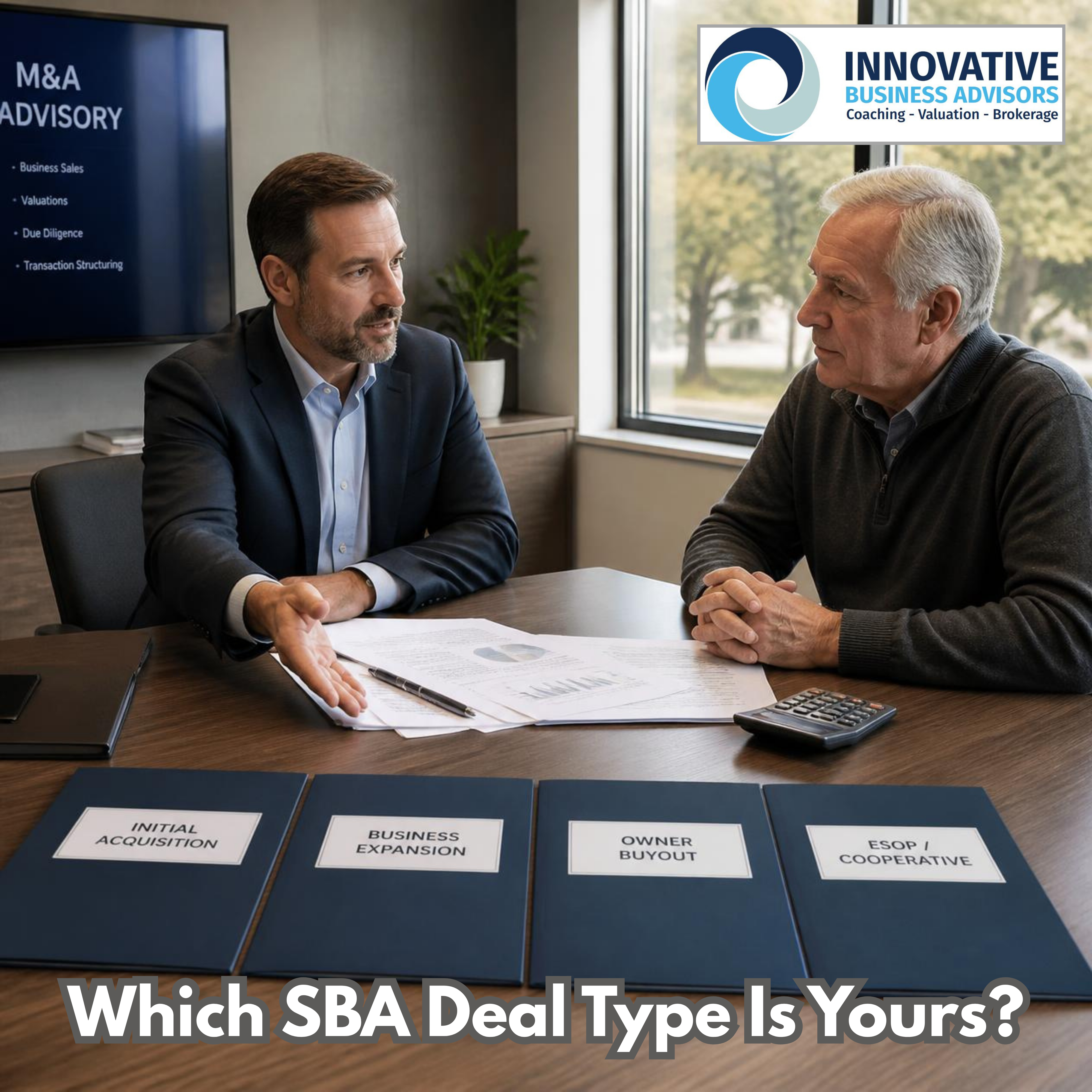
The SBA Just Created Four Categories for Business Sales — Which One Is Yours?
Starting October 1, 2026, the SBA requires every business sale financed with a 7(a) loan to be classified into one of four categories: Initial Acquisition, Business Expansion, Owner Buyout, or ESOP & Cooperative. The category your deal falls into determines how much cash the buyer needs up front, what financial reports the bank must order, and how strong the earnings need to be to support the loan. If you are planning to sell your business, you need to understand which category your deal will land in — because it directly affects your sale price, your timeline, and your deal structure.
Key Takeaways
Every SBA-financed business sale must now be classified into one of four categories, and the lender must enter the category into the SBA Loan System.
Initial Acquisition is the default. The lender must document in writing why a deal qualifies for any other category.
The category determines the buyer’s minimum down payment, the required debt service coverage ratio, and the level of financial due diligence.
Business Expansion gets the most favorable terms — but only if the buyer has operated a similar business for at least two years.
Owner Buyouts have new guardrails for bringing in outside investors.
What Are the Four SBA Transaction Categories?
Starting October 1, 2026, the SBA’s updated lending rules (SOP 50 10 8.1) require every change of ownership financed with a 7(a) loan to be placed into one of four categories. Think of these categories as buckets. Each bucket has its own set of rules for how the bank handles the loan. The lender picks the bucket, documents the choice in the credit memo, and enters it into the SBA’s system.
This matters to you as a seller because the bucket your buyer’s deal lands in controls three things: how much money the buyer must bring to the table, how closely the bank will examine your books, and what earnings ratio the deal must hit. Same business, same buyer — but a different category can mean a different outcome.
Here is what each one means.
What Is an Initial Acquisition?
An Initial Acquisition is any deal where a new owner — someone who was not previously an employee or owner of the business — ends up as the majority or largest individual owner. This is the most common type of business sale, and it is the default category. If the lender cannot document that the deal fits into one of the other three buckets, it lands here.
Initial Acquisitions carry the strictest requirements. The buyer must put down at least 10% equity, and that requirement cannot be reduced or waived. The deal must show a debt service coverage ratio of 1.25:1 — meaning the business must earn $1.25 for every $1.00 of debt payments. And if the purchase price is $3 million or more, the bank must order both an independent business valuation and a Quality of Earnings report.
If you are selling your business to someone who does not already own a piece of it and is not already working there, this is almost certainly where your deal will land.
What Is a Business Expansion?
A Business Expansion is when an existing operating business purchases another business. This is not someone buying their first company — it is an owner who already runs a business adding a second one.
To qualify, three conditions must be met:
- The buyer’s existing business must have been operating for at least two full fiscal years under its current ownership.
- The business being acquired must be in the same four-digit NAICS industry group as the buyer’s existing business.
- And the deal must result in the same number (or more) of full personal guarantors as existed before the transaction.
Why does this matter? Because Business Expansion gets the most favorable treatment. The debt service coverage ratio is 1.15:1 instead of 1.25:1, and the lender has the ability to reduce or even eliminate the 10% equity requirement if the buyer has strong liquidity and working capital. The buyer’s balance sheet must not show negative net worth at the last fiscal year-end.
If you are selling to a competitor, a company in your industry, or a strategic buyer who already runs a similar operation, this is the category you want the deal to qualify for. It gives the buyer the most room.
What Is an Owner Buyout?
An Owner Buyout is a deal that changes the ownership structure of the business without acquiring a different company. At least one original owner must remain in place after the transaction and personally guarantee the loan.
There are two types.
- Existing Owner Buyout is a transaction between current owners — one partner buying out another. Both the business and the acquiring owner must be co-borrowers on the loan.
- Partial Change of Ownership is when a new person buys some or all of a departing owner’s interest while at least one original owner stays. Under the new rules, the operating company and every new owner must be co-borrowers, no matter how small their stake. Even a 1% ownership interest triggers the co-borrower requirement.
The SBA added an important guardrail here. Any individual who is not currently employed by the business may only acquire less than 50% of the total equity and may not become the largest shareholder. If they would, the deal must be processed as an Initial Acquisition instead — with the stricter requirements that come with it.
Owner Buyouts require a debt service coverage ratio of 1.25:1. The baseline equity injection is 10%, but like Business Expansion, the lender may reduce or eliminate it if the buyer’s financial position supports it.
What About ESOPs and Cooperatives?
The fourth category covers sales to Employee Stock Ownership Plans (ESOPs) and cooperatives. These transactions have their own set of rules because the ownership structure is different — the employees collectively become the owners.
For most lower middle market business owners in Missouri and Illinois, this category is less common. But if you have explored selling to your employees, be aware that the debt service coverage requirement here is 1.25:1, and there is a federal statute requiring that if a seller stays on as a partial owner in an ESOP, they must provide a full, unlimited personal guarantee. That statutory requirement cannot be waived.
How Does the Category Affect My Sale?
The category drives three numbers that shape every deal.
- Equity injection — how much cash the buyer needs. Initial Acquisitions are locked at 10% with no relief. Business Expansions and Owner Buyouts start at 10% but can go lower. This directly affects how many buyers can afford your business.
- Debt service coverage — how strong the earnings must be relative to the loan payments. At 1.25:1, the business must earn 25% more than its total debt obligations. At 1.15:1 (Business Expansion only), it must earn 15% more. A lower ratio supports a higher loan amount on the same earnings.
- Financial due diligence — what reports the bank must order before approving the loan. Every category requires an independent business valuation. Deals at $3 million and above in the Initial Acquisition and Business Expansion categories also require a Quality of Earnings report. We will cover these requirements in detail in our next post.
What Should I Do Now?
If you are thinking about selling your business in the next one to three years, start by understanding which category your most likely buyer falls into. A first-time buyer with no prior ownership experience puts you in Initial Acquisition territory. A competitor or industry buyer may qualify as a Business Expansion. A partner buyout is an Owner Buyout.
The category is not something you choose — it is determined by the facts of the transaction. But knowing where your deal will land helps you plan your asking price, your deal structure, and the kind of buyer you market to.
Talk to your M&A advisor and your lender early. The rules are clear, and planning around them is far easier than discovering them at the closing table.
Frequently Asked Questions
Can the seller choose which category applies? No. The category is determined by the facts of the transaction — who the buyer is, whether they already own a business, and how the deal is structured. The lender documents the classification in their credit memorandum.
What if my buyer could qualify for more than one category? Initial Acquisition is the default. The lender must document in writing why a deal qualifies as anything else. If the lender cannot make the case, the deal is processed as an Initial Acquisition.
Does the category affect the interest rate on the loan? No. Interest rate rules are set separately and apply across all categories. The category affects equity, debt service coverage, and financial due diligence requirements.
When do these rules take effect? These rules apply to any 7(a) loan application that receives an SBA loan number on or after October 1, 2026. Applications already submitted before that date are handled under the previous rules (as of August 2026).
This post is part of a four-part series on the SBA’s new lending rules effective October 1, 2026. Up next: what the new financial due diligence requirements mean for your business sale.
The information in this post is based on SBA SOP 50 10 8.1. It is general information, not legal, tax, or lending advice. Consult your M&A advisor, lender, and legal counsel about your specific situation.
Read More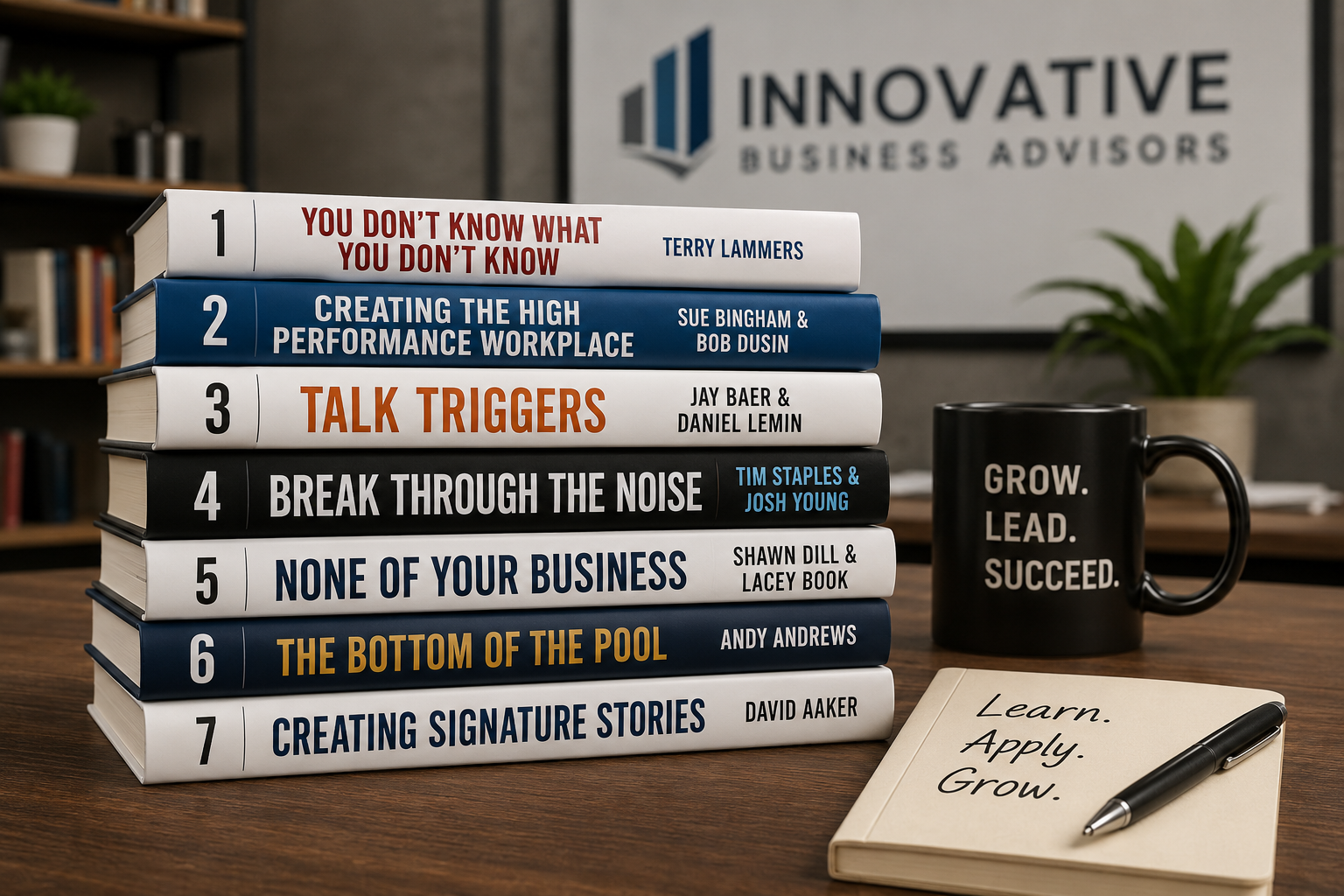
7 Must-Read Books That Will Help Entrepreneurs Grow Their Business
Every entrepreneur knows that scaling a business isn’t just about hard work — it’s about continuous learning. Successful founders absorb knowledge from every angle: leadership, marketing, strategy, and even merger-and-acquisition planning. That’s why reading the right books can be one of the smartest actions a business leader takes. In the Forbes article “The Best Books to Help Entrepreneurs Grow a Business,” top titles were curated to help business owners at every stage — from startup to expansion.
Here’s a closer look at those standout reads and why you should consider them for your next business-building bookshelf.
📖 1. You Don’t Know What You Don’t Know — Terry Lammers
Kicking off the Forbes list is You Don’t Know What You Don’t Know: Everything You Need to Know to Buy or Sell a Business by Terry Lammers—a distinction that speaks to both the relevance and impact of his work. Terry is not only the author of this highly regarded book, but is also the Managing Partner of Innovative Business Advisors.
In the book, Terry draws from decades of real-world experience helping business owners navigate growth, acquisitions, exit planning, and succession strategies. These are the same core areas where Innovative Business Advisors works closely with privately held companies—providing guidance on buying and selling businesses, business valuations, exit readiness, and strategic planning.
At Innovative, the mission is simple: help business owners maximize value and make informed decisions at every stage of ownership. You Don’t Know What You Don’t Know reflects that philosophy by shedding light on critical issues many entrepreneurs don’t realize they should be addressing until it’s too late. Whether an owner is years away from a transition or actively considering a sale, the insights in this book align directly with our advisory services.
The recognition of Terry’s book by Forbes reinforces the depth of experience and practical knowledge behind Innovative’s team—and why proactive planning can make a meaningful difference in the outcome of a business journey.
📘 2. Creating the High Performance Workplace — Sue Bingham & Bob Dusin
Growth isn’t possible without effective teams. Bingham and Dusin explore how to cultivate a workplace where employees act like owners — giving direction on fostering engagement, accountability, and a culture that fuels growth rather than resists change.
💡 3. Talk Triggers — Jay Baer & Daniel Lemin
Word-of-mouth still rules. Baer and Lemin show how to deliberately design customer experiences that people talk about, helping your business grow organically through referrals instead of expensive advertising.
📈 4. Break Through the Noise — Tim Staples & Josh Young
Standing out in today’s crowded digital landscape can feel impossible — but this book offers real strategies for boosting your brand visibility through smart online marketing, without breaking the bank.
💡 5. None of Your Business — Shawn Dill & Lacey Book
For many visionaries, the leap from dreamer to business builder is the hardest. Dill and Book bridge that gap by helping readers think like entrepreneurs, turning passion into profit with practical, actionable steps.
🎯 6. The Bottom of the Pool — Andy Andrews
Andrews challenges entrepreneurs to question long-held assumptions and comfort-zone thinking. This mindset shift can be a game-changer — innovation often begins where certainty ends.
📖 7. Creating Signature Stories — David Aaker
Strong brands are built on memorable narratives. Aaker’s guide teaches entrepreneurs why storytelling matters and how to craft stories that bring your business, mission, and values to life.
🚀 Why These Books Matter
Reading about business strategy is a great first step — but the real growth comes from applying what you learn with the right guidance and timing. The books highlighted in Forbes blend mindset, practical action, and real-world experience to help entrepreneurs:
Strengthen leadership and company culture,
Build brands that stand out,
Make smarter growth decisions, and
Prepare for major milestones such as acquisitions, succession planning, or an eventual sale.
At Innovative Business Advisors, these same principles are put into practice every day. We work alongside business owners to help them understand their company’s value, plan proactively for the future, and navigate complex transitions with clarity and confidence. Whether an owner is years away from an exit or simply wants to be better prepared for opportunities ahead, education paired with experienced advisory support can make all the difference.
For entrepreneurs inspired by the insights in these books, learning more about valuation, exit readiness, and strategic planning can be a natural next step. Contact us at info@innovativeba.com to learn more.
📌 Final Thought
Every entrepreneur’s journey is unique, but great books give you the advantage of learning from others who’ve walked the path before. Whether you’re just starting or aiming to grow your company to the next level, make these reads part of your strategy for success.
Read More