
7 Must-Read Books That Will Help Entrepreneurs Grow Their Business
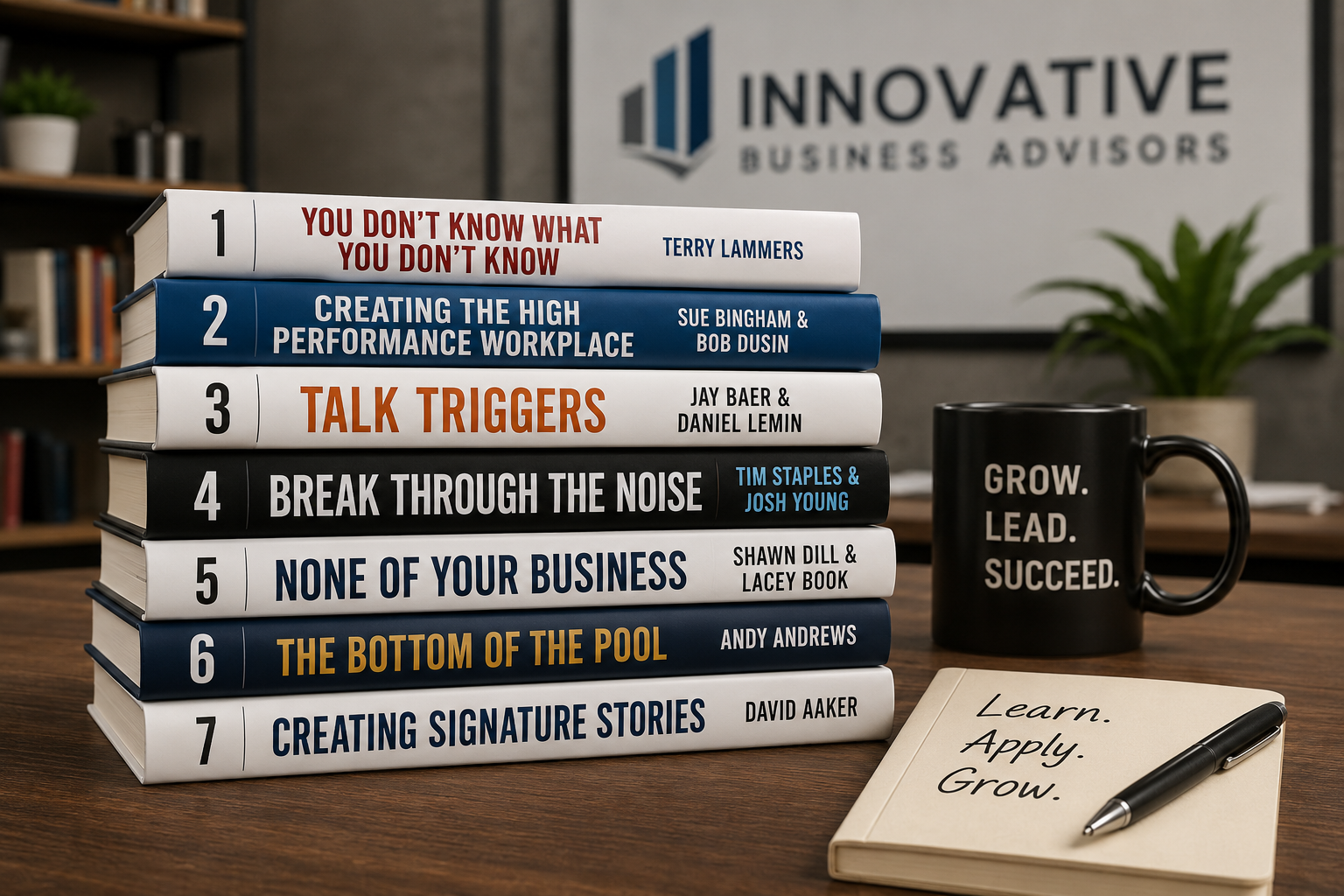
Every entrepreneur knows that scaling a business isn’t just about hard work — it’s about continuous learning. Successful founders absorb knowledge from every angle: leadership, marketing, strategy, and even merger-and-acquisition planning. That’s why reading the right books can be one of the smartest actions a business leader takes. In the Forbes article “The Best Books to Help Entrepreneurs Grow a Business,” top titles were curated to help business owners at every stage — from startup to expansion.
Here’s a closer look at those standout reads and why you should consider them for your next business-building bookshelf.
📖 1. You Don’t Know What You Don’t Know — Terry Lammers
Kicking off the Forbes list is You Don’t Know What You Don’t Know: Everything You Need to Know to Buy or Sell a Business by Terry Lammers—a distinction that speaks to both the relevance and impact of his work. Terry is not only the author of this highly regarded book, but is also the Managing Partner of Innovative Business Advisors.
In the book, Terry draws from decades of real-world experience helping business owners navigate growth, acquisitions, exit planning, and succession strategies. These are the same core areas where Innovative Business Advisors works closely with privately held companies—providing guidance on buying and selling businesses, business valuations, exit readiness, and strategic planning.
At Innovative, the mission is simple: help business owners maximize value and make informed decisions at every stage of ownership. You Don’t Know What You Don’t Know reflects that philosophy by shedding light on critical issues many entrepreneurs don’t realize they should be addressing until it’s too late. Whether an owner is years away from a transition or actively considering a sale, the insights in this book align directly with our advisory services.
The recognition of Terry’s book by Forbes reinforces the depth of experience and practical knowledge behind Innovative’s team—and why proactive planning can make a meaningful difference in the outcome of a business journey.
📘 2. Creating the High Performance Workplace — Sue Bingham & Bob Dusin
Growth isn’t possible without effective teams. Bingham and Dusin explore how to cultivate a workplace where employees act like owners — giving direction on fostering engagement, accountability, and a culture that fuels growth rather than resists change.
💡 3. Talk Triggers — Jay Baer & Daniel Lemin
Word-of-mouth still rules. Baer and Lemin show how to deliberately design customer experiences that people talk about, helping your business grow organically through referrals instead of expensive advertising.
📈 4. Break Through the Noise — Tim Staples & Josh Young
Standing out in today’s crowded digital landscape can feel impossible — but this book offers real strategies for boosting your brand visibility through smart online marketing, without breaking the bank.
💡 5. None of Your Business — Shawn Dill & Lacey Book
For many visionaries, the leap from dreamer to business builder is the hardest. Dill and Book bridge that gap by helping readers think like entrepreneurs, turning passion into profit with practical, actionable steps.
🎯 6. The Bottom of the Pool — Andy Andrews
Andrews challenges entrepreneurs to question long-held assumptions and comfort-zone thinking. This mindset shift can be a game-changer — innovation often begins where certainty ends.
📖 7. Creating Signature Stories — David Aaker
Strong brands are built on memorable narratives. Aaker’s guide teaches entrepreneurs why storytelling matters and how to craft stories that bring your business, mission, and values to life.
🚀 Why These Books Matter
Reading about business strategy is a great first step — but the real growth comes from applying what you learn with the right guidance and timing. The books highlighted in Forbes blend mindset, practical action, and real-world experience to help entrepreneurs:
 Strengthen leadership and company culture,
Build brands that stand out,
Make smarter growth decisions, and
Prepare for major milestones such as acquisitions, succession planning, or an eventual sale.
At Innovative Business Advisors, these same principles are put into practice every day. We work alongside business owners to help them understand their company’s value, plan proactively for the future, and navigate complex transitions with clarity and confidence. Whether an owner is years away from an exit or simply wants to be better prepared for opportunities ahead, education paired with experienced advisory support can make all the difference.
For entrepreneurs inspired by the insights in these books, learning more about valuation, exit readiness, and strategic planning can be a natural next step. Contact us at info@innovativeba.com to learn more.
📌 Final Thought
Every entrepreneur’s journey is unique, but great books give you the advantage of learning from others who’ve walked the path before. Whether you’re just starting or aiming to grow your company to the next level, make these reads part of your strategy for success.
Read More

A Smart Buyer’s Guide to Evaluating a Business Opportunity

A deal may first look attractive on paper. However, without digging deeper, you may risk problems that are not immediately visible. We recommend always being curious. Ask direct questions, as this will give you a clearer picture of what you are actually buying and help you avoid surprises later. Let’s take a closer look at how to best evaluate a business through asking questions.
Examine the Asking Price
It is a good idea to consider how the seller determined the asking price. The explanation should be clear and supported by solid financial data. If the reasoning feels vague or unsupported, it could be a strong signal to proceed carefully. Transparent and well-documented financials are at the basis of any sound acquisition, and reviewing them thoroughly should be a priority from the outset.
Understand Seller Motivations
You will also want to try to understand the seller’s motivations. If the business does not sell, what will the owner do next? If you can get answers to these kinds of questions, it can reveal how flexible sellers may be during negotiations and whether they feel pressure to close the deal. This insight can be useful when structuring an offer.
Assess Fit and Capability
Beyond numbers and strategy, consider whether the business is the right fit for you. Every company requires a specific mix of skills and experience. Understanding what it takes to run the operation successfully helps you evaluate whether you are prepared to step in and lead effectively. Even a profitable business can struggle under the wrong management.
Identify Risks and Dependencies
Another important area to ask about is whether or not there are any past or potential legal issues. If so, you will want to evaluate these as well as other issues that could threaten stability, such as reliance on a single major customer or vendor. These factors can significantly impact the long-term success of the business and should not be overlooked.
Review Operations
If the business has well-documented procedures, this can make transitions smoother and reduce the likelihood of disruption after the sale. It is also important to understand what employees plan to do once ownership changes hands. This way you can anticipate staffing challenges and maintain continuity.
Learn From the Seller’s Experience
Exploring the seller’s perspective can be very valuable. You might want to ask what they would have done differently. This simple question can uncover missed opportunities, inefficiencies, or lessons learned over time. When you ask the seller questions, this can highlight areas where you might improve the business. You may also gain insight into pitfalls that could repeat under new ownership. If a seller is open about their experiences, these insights can greatly benefit you.
The more information you gather during the sales process, the better. Each question you ask will strengthen your understanding of the opportunity in front of you. Taking the time to investigate is not just due diligence. It is the foundation for making a confident and informed decision.
Copyright: Business Brokerage Press, Inc.
The post A Smart Buyer’s Guide to Evaluating a Business Opportunity appeared first on Deal Studio.

How to Achieve Better Negotiation Results

The term “negotiation” tends to stir mixed reactions. Some people enjoy the challenge, while others would rather avoid it altogether. No matter how you feel about the tactics you might use, the end goal is to reach an agreement that works in your favor. Strengthening your approach with proven strategies can help you navigate conversations more confidently and lead to a more successful deal. Let’s take a closer look at some tried and tested negotiation techniques.
Bring in Objective Expertise
Handling your own negotiation can be difficult, especially when personal stakes are high. Owners, in particular, may find it challenging to separate emotion from logic, while buyers can also become attached to a deal for the wrong reasons.
The good news here is that a neutral third party can add real value. Business brokerage professionals bring market knowledge, negotiation experience, and objectivity to the table. This helps both sides stay focused on realistic outcomes and fair terms.
Use Firm Positions Strategically
The “all-or-nothing” approach can sometimes be effective when used thoughtfully. In this scenario, one side presents a final offer with little room for further discussion.
Of course, while this tactic can signal confidence and clarity, it also carries the risk of ending talks prematurely. It’s most useful in situations where demand is high or when one party has strong alternatives. However, it’s also important to know when to avoid this approach. Flexibility often opens the door to better results.
Focus on What Truly Matters
Successful negotiations go beyond numbers. Each party typically has specific priorities. If you’re able to identify these early on, it can unlock creative solutions.
For example, a seller might value employee retention or legacy considerations just as much as price. Or a buyer may prioritize something like transition support or financing terms. By uncovering and addressing these underlying interests, both sides can shape a deal that draws on a wider range of considerations. Remember that every buyer and seller is different and it’s important not to make assumptions.
Meet in the Middle When It Makes Sense
When discussions stall over relatively small gaps, a willingness to compromise can keep momentum alive. Many brokerage professionals recommend trying to bridge the difference between positions. This strategy demonstrates cooperation and reduces potential feelings of tension.
Keep in mind that this particular tactic works best when both sides are already close to agreement and want to avoid unnecessary friction.
Additional Strategies
To further improve the odds of a successful deal, consider incorporating these additional negotiation techniques:
- Anchor the Conversation – Setting the initial offer can influence how the rest of the negotiation unfolds. A well-researched starting point frames expectations and gives you an advantage.
- Leverage Silence – Pausing after an offer or counteroffer can create pressure and encourage the other party to reveal more information or make concessions.
- Create Multiple Options – Presenting several structured proposals allows the other party to choose, which can foster a sense of control while still guiding the outcome.
- Always Know When to Walk Away – Understanding your limits ensures you don’t agree to unfavorable terms under pressure.
Ultimately, negotiation is both an art and a skill. Every deal comes with its own dynamics and you’ll want to keep that in mind. Through combining preparation, and flexibility, you will find that you will be able to consistently reach stronger agreements and navigate even complex negotiations with confidence.
Copyright: Business Brokerage Press, Inc.
The post How to Achieve Better Negotiation Results appeared first on Deal Studio.

High Buyer Success Rates

Entering the world of buying a business can be an emotional experience for both buyers and sellers. Rest assured; this is completely normal. Professionals such as business brokers and M&A advisors play an important role in easing these concerns by guiding clients to understand how the process works and highlighting potential challenges. Understanding these hurdles in advance can significantly improve your chances of completing a successful transaction.
Getting Started: The Intake Stage
At the beginning of the process, buyers should be prepared to sign a non-disclosure agreement (NDA). When you sign an NDA, it’s important to take its obligations seriously. Sellers and their representatives will typically request detailed information, including financial records and even a resume. While this may feel intrusive, it is a routine part of evaluating qualified buyers.
Understanding Financing Delays
Securing funding often takes longer than expected. Lenders frequently request additional documentation throughout the approval process, which can feel frustrating. However, this is entirely standard, and patience is key during this stage.
The Role of Legal Advisors
Attorneys are a necessary part of any business transaction, but their involvement can sometimes introduce more delays and even occasional stress. Remember that their primary goal is to protect your interests. While this may occasionally slow progress or complicate negotiations, it is ultimately in your best interests. While their guidance is valuable, remember that final decisions ultimately rest with you as the buyer.
Making an Offer and Conducting Due Diligence
A non-binding offer signals genuine interest in acquiring a business while allowing both parties the flexibility to walk away if terms aren’t finalized within a certain timeframe. While new buyers often worry that this offer will create a legal obligation, the fact is that it is designed to help move negotiations forward. It is non-binding but establishes a foundation for further discussions.
Due diligence is a critical step that gives buyers access to detailed and confidential information, including financial performance, inventory, and legal matters. It also provides an opportunity to ask questions and perform independent research. Importantly, you as the buyer retain the right to withdraw during this phase. This step ensures that you can make the most well-informed decision possible.
Why Professional Guidance Matters
Working with experienced brokers and M&A advisors can make a significant difference. They help streamline the process, reduce unnecessary stress, and guide buyers toward opportunities that align with their goals. When you work with professionals it increases the likelihood of a smooth and successful transaction.
Copyright: Business Brokerage Press, Inc.
The post High Buyer Success Rates appeared first on Deal Studio.

A Practical Roadmap for First-Time Business Buyers

For many aspiring entrepreneurs, buying an existing business can streamline the way to business ownership. After all, an established company already has customers, revenue, systems, and a market presence. However, the process of purchasing a business is complex, especially for first-time buyers.
Unlike buying a home or making traditional investments, acquiring a business involves evaluating financial performance, understanding operations, negotiating deal terms, and managing risk. Because of these complexities, many first-time buyers benefit from working with an experienced business broker or M&A advisor who can help guide them through the process.
While every transaction is different, most successful acquisitions follow a clear progression of steps.
Start by Defining What You Want
Before reviewing listings or contacting sellers, it’s important to clarify what type of business fits your goals. Consider factors such as industry, company size, required investment, location, and your own experience or interests.
Many first-time buyers begin the search with only a vague idea of what they want. A business broker can help refine your criteria by discussing your financial resources and long-term objectives. Having a defined acquisition strategy makes the search far more efficient and increases the chances of finding the right opportunity that will stand the test of time.
Protect Sensitive Information
Once you identify a business that interests you, the seller will typically require you to sign a confidentiality agreement before sharing detailed information. This document, often called a Non-Disclosure Agreement (NDA), protects the company’s sensitive data.
For business owners, confidentiality is critical. Employees, customers, and competitors should not learn prematurely that the company is for sale. By signing the agreement, you demonstrate professionalism and confirm that you will handle the information responsibly.
Review Financial and Operational Details
After signing the confidentiality agreement, you’ll gain access to deeper information about the business. This may include profit and loss statements, tax returns, operational reports, and background information about the company’s customers and market position.
This stage requires careful analysis. You’ll want to understand how the business generates revenue and what its customer base looks like. You’ll also want to think about whether the expenses are consistent with industry norms. An experienced advisor can help you interpret the financial data and identify issues that may deserve further investigation.
Determine Whether the Opportunity Makes Sense
Once you’ve reviewed the available information, the next step is deciding whether the business represents a viable investment for you. Beyond financial performance, you’ll want to consider industry stability, growth potential, and how dependent the business is on the current owner.
This evaluation helps you determine whether the business aligns with your capabilities and expectations as an owner. Not every good opportunity will be the right fit for you. Knowing when to walk away is just as important as knowing when to move forward.
Structure and Submit an Offer
If the business meets your criteria, the next step is submitting an offer. This is usually done through a written document that outlines the proposed purchase price, financing terms, and conditions that must be satisfied before the transaction closes.
Offers often include contingencies, such as completing formal due diligence or securing financing. These details help protect both parties and establish a clear framework for moving toward a final agreement.
Building the Right Team
One of the most valuable steps a first-time buyer can take is assembling a knowledgeable team. Business brokers, attorneys, accountants, and financial advisors all play important roles in the acquisition process.
With the right guidance and a thoughtful approach, first-time buyers can navigate the process with confidence and significantly increase their chances of acquiring a business that aligns with their long-term vision.
Copyright: Business Brokerage Press, Inc.
The post A Practical Roadmap for First-Time Business Buyers appeared first on Deal Studio.